The Healing Shelf: Which Anime Your Crew Actually Puts On When Everything Falls Apart
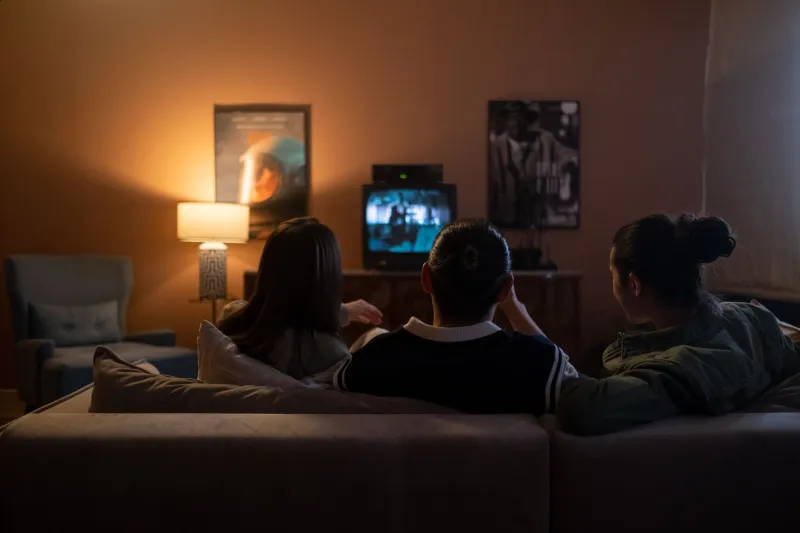
There's a difference between an anime you love and an anime you need. You might love a show for its animation, its plot, its ambition. But the shows you need — the ones you put on at 1 AM after a hard day, or during the week everything went sideways at once — those operate on a completely different level.
Every committed anime fan has a comfort shelf. And what's striking, when you talk to people about it, is how often the same titles come up across completely different friend groups. There's something almost universal about the shows that earn that role, and it's not always the ones you'd predict.
What "Comforting" Actually Means
Before we get into specific shows, it's worth pulling apart what comfort even means in this context, because it's not as simple as "happy" or "low-stakes."
Some of the most commonly cited comfort anime are genuinely quiet and gentle — slice-of-life series with soft color palettes and no real conflict. But others are shows people have already seen multiple times, including shows with gut-punch emotional moments, significant stakes, and storylines that made them cry the first time through. The comfort isn't coming from a lack of feeling. It's coming from known feeling.
There's real psychology behind this. Rewatching something familiar lowers cognitive load — you're not processing new information or managing narrative uncertainty. Your brain can relax into the story. And if the show has emotional resonance, you get the catharsis without the anxiety of not knowing what's coming. It's the media equivalent of comfort food: not necessarily the most impressive thing, but exactly what you needed.
The Shows That Keep Coming Up
We asked around — friends, readers, Discord regulars — about what actually goes on during the hard weeks. Here's what kept surfacing.
Natsume's Book of Friends came up more than almost anything else. The pacing is slow, the stories are self-contained, and the emotional register is consistently gentle without being saccharine. Multiple people described putting it on specifically because it doesn't demand anything from you. One reader from Portland said she's rewatched the first two seasons so many times she basically has them memorized, and she still puts them on when she's anxious. "It's like the show already knows I'm tired," she said.
Fruits Basket — specifically the 2019 remake — showed up constantly, which is interesting because it's not a light show. It deals with trauma, family dysfunction, and some genuinely painful emotional territory. But it does so with care, and the central message — that you are allowed to be loved, that you don't have to earn belonging — seems to hit people exactly when they need to hear it. Several people mentioned watching it during a breakup or a period of depression. It's not comfort because it's easy. It's comfort because it's honest.
My Neighbor Totoro and Kiki's Delivery Service get invoked as a unit more often than not. Studio Ghibli films occupy a specific emotional category: they're visually lush, they're safe, and they carry the weight of nostalgia for most people who grew up watching them. Putting on a Ghibli film during a hard week often isn't about the story — it's about being transported to a feeling you associate with being a kid, with things being simpler, with the world having a kind of gentle magic.
Laid-Back Camp is the consensus pick for when you need something with absolutely zero conflict. The show is, functionally, a meditation on being outside and being warm. Multiple friend groups described it as their "background show" during stressful periods — something playing on the TV while people cook dinner or do homework together, not because anyone is intensely watching, but because having it on makes the room feel calmer.
Fullmetal Alchemist: Brotherhood is the wildcard here. It's a long show with high stakes and real tragedy, and yet it comes up repeatedly as a comfort rewatch. The reason seems to be the relationship at its center — two brothers who refuse to give up on each other no matter what. For a lot of fans, that relationship is the emotional anchor. The show is hard, but the love in it is unconditional, and that's what people come back for.
When the Whole Crew Lands on the Same Show
Something specific happens when a friend group independently converges on the same comfort series during a difficult period. It's not planned — someone mentions they've been rewatching something, and two other people say they just started it again too, and suddenly it's a group event.
This kind of convergence tends to happen around shared stressors. Post-graduation anxiety, a rough patch in the group's social dynamics, a season of life where everyone's dealing with something hard at the same time. The shared rewatch becomes a way of being in the same emotional space without having to articulate exactly what you're feeling.
One reader from Chicago described her friend group all independently returning to Fruits Basket during the first pandemic winter. Nobody organized it. They just all ended up there. "We had a call where we all admitted we were on our second rewatch in like two months," she said. "It was kind of embarrassing but also really comforting? Like, oh, we're all going through it."
That's the thing about comfort anime in a crew context — it becomes a shared language for emotional states that are hard to describe directly.
What Makes a Show Actually Earn the Comfort Tier
Based on everything we heard, a few qualities seem to consistently show up in the shows that make it onto people's healing shelves.
First, emotional safety. Not absence of emotion — but a sense that the show is on your side. That it's not going to ambush you with something gratuitous or cruel. You know the show's emotional register, and you trust it.
Second, a sense of belonging at the center. The shows that come up most often are fundamentally about people (or beings) who find their people. Chosen family, found community, relationships that hold. That theme hits differently when life is reminding you that connection is hard.
Third, a pace that lets you breathe. Even the longer, higher-stakes shows people reach for tend to have quieter moments woven through them. Room to exhale. Space to just be in the world of the show without being relentlessly pushed forward.
And finally — honestly, maybe most importantly — history. The shows that become true comfort watches are almost always shows you've seen before, often multiple times. The comfort isn't just in the content. It's in the familiarity. In the fact that this specific show has been there before, during other hard stretches, and it helped then too.
Your Crew's Comfort Shelf Is a Map
If you pay attention to what your friend group reaches for when things get heavy, you learn something about them. About what they need, what they're afraid of, what kind of love they're looking for from a story.
The healing shelf isn't random. It's accumulated evidence of what's actually worked — what's held people together during the hard parts, what's made a difficult week a little more bearable.
That's worth knowing. And honestly, it's worth talking about with your crew. Not in a heavy way. Just: what do you put on when everything's a lot?
The answers might surprise you. Or they might be exactly what you expected. Either way, you'll probably end up watching something together.