Stop Guarding the Gate: What Happens When You Actually Let New Fans In
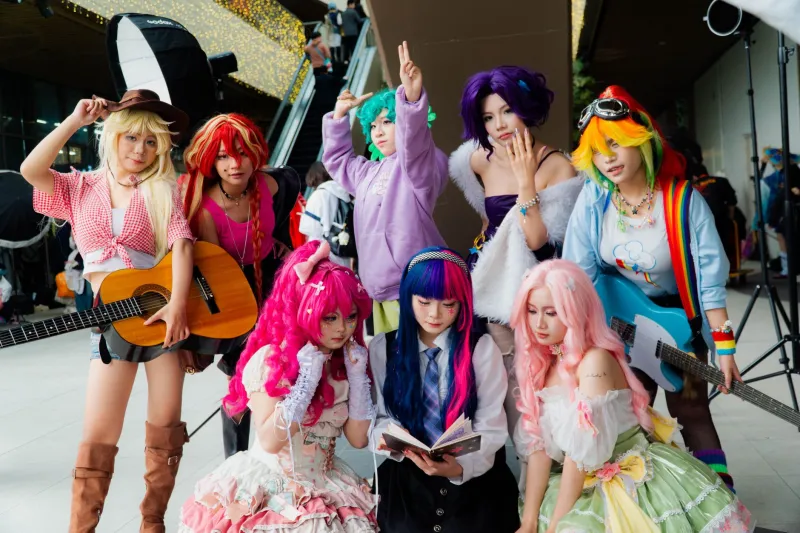
Let's be honest about something: every fandom has that person. Maybe you've met them at a con, or in a Discord server, or in a comment section that got way too heated. They've been watching since before the dub existed. They own the original DVDs. They know the creator's full production history and they are not shy about letting you know it. And when someone new shows up, excited and a little wide-eyed, asking where to start — that person sighs.
Gatekeeping in anime and manga fandoms isn't new, and it isn't unique to this space. But it's worth asking what it actually does to a community, and whether the instinct to protect "your" fandom from newcomers is doing anything useful at all.
Where the Gatekeeping Instinct Comes From
To be fair to the gatekeepers of the world — and this is the last time we're going to be that fair — the impulse isn't always coming from a purely mean place. A lot of longtime fans discovered their communities during times when liking anime was genuinely socially risky. Being into manga in a US middle school in the early 2000s wasn't a personality trait people wore proudly — it was something you kept quiet or got teased for. The community you found in those conditions felt earned. It felt like a refuge.
So when something blows up — when Demon Slayer becomes a billion-dollar box office franchise or Jujutsu Kaisen is suddenly everywhere — there's a real grief that some fans feel. The thing that was yours, the thing that marked you as part of a specific community, is now a mainstream talking point. And the newcomers flooding in don't know the history, don't know the context, don't know what it felt like before.
That grief is understandable. The gatekeeping behavior it sometimes produces is not.
What Gatekeeping Actually Costs the Fandom
Here's the practical reality: fandoms that don't grow, die. Not dramatically, not overnight — but they shrink. The community gets older and more insular. The conversations become more repetitive because everyone already knows everything there is to know. The energy that makes a fandom feel alive — the discovery, the debate, the excitement of someone experiencing something for the first time — disappears.
Nadia, a 29-year-old fan from Seattle who's been active in anime communities for over a decade, has watched this happen up close. "There was a forum I used to love for Fullmetal Alchemist discussion. By the time I found it, it had already gotten pretty hostile to new people asking basic questions. Five years later, it's basically a ghost town. The old guard ran everyone off and then had nobody left to talk to."
It's not just about keeping communities numerically healthy, either. New fans bring new energy, new readings, new creative work. They come in without the baggage of old fandom debates and sometimes see things with a clarity that longtime fans have completely lost. A newcomer watching Neon Genesis Evangelion for the first time in 2024, with no prior context about its production history or its cultural moment, might have takes that are genuinely fresh and interesting — if anyone bothers to listen instead of correcting them for mispronouncing a character's name.
What Welcoming New Fans Actually Looks Like
There's a version of "welcoming new fans" that's just performative — a fandom saying the right things while still making newcomers feel like outsiders in a hundred small ways. Real welcoming is different, and it shows up in specifics.
It looks like answering the "where do I start" question without the sigh. It looks like not correcting someone's enthusiasm with a lecture about canon. It looks like remembering what it felt like to be new — the overwhelm of a long-running series, the embarrassment of not knowing terminology, the vulnerability of admitting you only found something because it went viral.
Dominique, 22, from Houston, came into anime fandom through Attack on Titan during the pandemic and describes her early experiences as a mixed bag. "Some people were so cool about it. They'd rec me stuff, explain things without making me feel dumb, get hyped with me. Other people made it really clear they thought I was a fake fan because I hadn't been watching for years. It made me way more careful about who I engaged with."
That careful withdrawal is the cost. A new fan who gets burned early doesn't just leave — they leave and they tell their friends, and those potential fans never show up at all.
The Hierarchy Problem
Even in communities that consider themselves welcoming, hierarchies based on tenure can quietly poison the well. The implicit ranking — original fans at the top, recent converts somewhere in the middle, anyone who found the series through a TikTok clip at the bottom — creates a social dynamic that's exhausting to navigate and genuinely discourages participation.
This hierarchy also tends to define "real" fandom in ways that are pretty arbitrary. Watching something from its original airing doesn't make your investment more valid than someone who binged the whole thing last month. Reading the manga first doesn't make your emotional response to the story more legitimate. Fan authenticity isn't a function of timing.
The communities that seem to actually thrive — the Discord servers that stay active, the subreddits that feel genuinely fun to post in, the con communities that keep getting bigger — tend to be the ones where tenure is just a fact, not a status. The ten-year veterans and the three-month newcomers are both just people who like the same thing. That's the whole point.
Why Your Friend Group Benefits From the New Person
Bring this back to something personal for a second. Think about the last time someone in your crew got a friend into a show you all love. Remember what it was like to watch them react to that scene — the one you've already processed a hundred times — completely fresh? Remember how it made you feel something about the story again, in a way you hadn't in a while?
New fans do that. They remind you why you loved something in the first place. They ask questions that make you articulate things you'd stopped thinking about. They get excited in a way that's genuinely contagious.
Gatekeeping doesn't protect your fandom. It just makes it quieter and smaller and a little sadder. Opening the door — actually opening it, not just leaving it unlocked — is what keeps the thing you love alive.
So the next time someone shows up with a basic question and stars in their eyes, maybe skip the sigh. You were that person once. The fandom was better for letting you in.