Press Repeat: How One Anime Song Became the Anthem That Held Your Friend Group Together
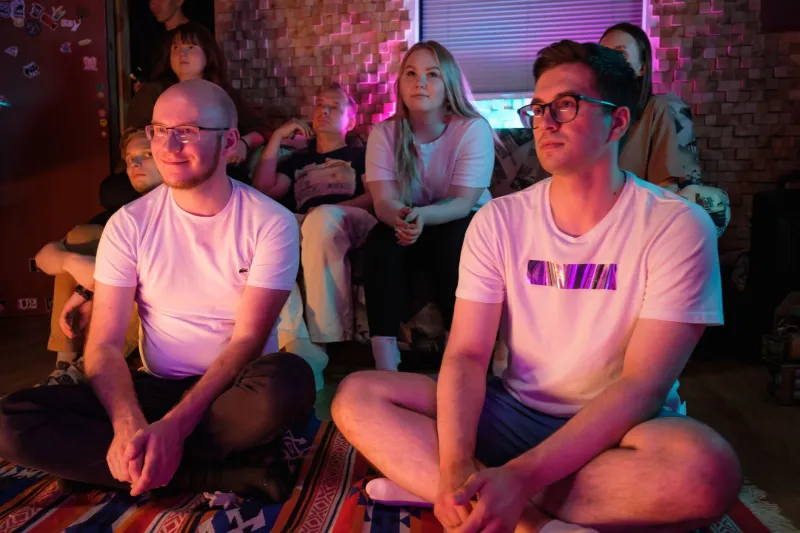
You probably know exactly which song it is for your crew. Maybe it's the Gurren Lagann insert track that started playing in your group chat at 2am during finals week. Maybe it's the Your Lie in April OST that someone put on during a drive home after a rough night and nobody said a word — they just let it run. Maybe it's something embarrassing, like the Sword Art Online opening that you all genuinely, unironically loved in 2013 and still can't hear without getting a little emotional.
Anime music does something to people. And when it does that something with other people, it stops being just a song. It becomes a timestamp. A code word. A whole feeling compressed into three minutes and thirty seconds.
The Science-ish Reason Music Bonds People
Okay, we're not going to go full research paper on you, but there's a real reason this happens. Music activates memory and emotion in ways that are deeply tied to context — who you were with, where you were, what you were feeling. When a song becomes attached to a shared experience, it essentially becomes a shortcut back to that moment every time you hear it.
For anime fans specifically, there's an extra layer. You're not just hearing a banger — you're hearing a piece of music that was deliberately crafted to amplify a narrative you're emotionally invested in. When Hiroyuki Sawano drops a wall of orchestral sound over a climactic scene, your nervous system doesn't really distinguish between the fiction and the feeling. It's all real to you. And when you're watching that scene next to someone you care about, those two emotional currents — the story's and your own — get wired together.
That's why a song from an anime you watched with your best friend at seventeen can make you feel seventeen again the second it comes on shuffle at twenty-six.
The Inside Joke Songs
Every crew has at least one of these. The track that has become so thoroughly meme-ified within your specific friend group that it barely functions as music anymore — it's just a trigger for collective chaos.
For a lot of US anime fans who grew up in the early-to-mid 2010s, the Attack on Titan Season 1 OST hits this way. Someone plays "DOA" or "Vogel im Käfig" and suddenly everyone's doing the voice, quoting the bit, collapsing into the specific brand of unhinged that only exists inside your friend group's private language.
These songs aren't really about the anime anymore. They're about the version of yourselves that exists when you're all together. The music is just the key that unlocks the room.
The Songs That Got You Through It
This is where it gets heavier, and also where it gets real.
Anime fandoms in the US skew young, which means a lot of us were discovering these soundtracks during periods that were genuinely hard — high school loneliness, college transitions, the first time a relationship ended badly, the first time you lost someone. And when the people around you are going through it at the same time, music becomes the thing you reach for when words feel like too much work.
Fan communities online are full of stories like this. Someone mentions the Clannad soundtrack and the replies are immediately split between people laughing and people typing "I'm not okay" with zero context needed. The Anohana ending theme "secret base Kimi ga Kureta Mono" has an entire reputation as the song that breaks people — and a lot of those people got broken by it together, sitting on someone's floor with bad snacks and way too many feelings.
There's something about that shared vulnerability that makes the bond stick differently. You weren't just watching an anime. You were watching it while being a person, with all the mess that entails, and someone was there for it. The song remembers that even when the details get fuzzy.
When the Anthem Outlives the Friendship
Here's the part nobody talks about enough: sometimes the song stays and the people don't.
Friend groups shift. People move, drift, fall out. The crew that watched Fullmetal Alchemist: Brotherhood together in someone's dorm room might be scattered across three time zones by now, some of them not really in touch anymore. But "Again" by YUI or "Alchemy" by Edward Elric's fictional soul or whatever your particular emotional damage is — that track still exists. It still plays.
And it's weird. Because hearing it can feel like grief and nostalgia and warmth all at once. You're mourning a version of your life while also being grateful it happened. The music holds the shape of the friendship even when the friendship itself has changed form.
If you've ever turned off a song mid-chorus because it hit too close, you know exactly what we're talking about.
Building New Anthems
The good news — if your crew is still intact and you're actively in the business of making memories — is that this process never stops. New anime keeps coming out. New music keeps getting made. Every season brings another opening that could become the opening for whatever chapter of your life you're currently living.
Jujutsu Kaisen's "Kaikai Kitan" has already done this for a whole generation of newer fans. Demon Slayer's "Gurenge" was inescapable for a reason — it's the kind of song that sounds like a rallying cry, and people used it as one. Whatever you're watching right now with your people, there's probably a track in that OST that's quietly becoming your next anthem without you even realizing it.
Pay attention to the songs you keep coming back to. Notice which ones your friends send unprompted. The one that shows up in a voice message at midnight, the one someone adds to the shared playlist with zero explanation — those are the ones doing the work.
Your Crew's Soundtrack Is a Love Language
At the end of the day, sharing an anime song with someone is an act of intimacy. You're saying: this thing moved me, and I want you to be moved by it too, and if you are, then we're the same kind of person in some important way.
That's not a small thing. In a culture that doesn't always make it easy to say "I care about you" out loud, music — especially music from a story you both love — is one of the most honest ways to do it.
So yeah. Queue up that track. Send it to your people. Let it be corny. Let it be a lot.
That's kind of the whole point.